Anecdotes from the Memoir of Charles Campbell White
Charles Campbell White (known as Cam) served in both the RAF and the RNZAF, flying Spitfires and Hurricanes in the UK and Singapore, then P-40s in the Pacific. Cam enjoyed writing about his exploits and kept notebooks throughout his life, which he complied into a memoir for his family. The following is a selection from that memoir, prefaced by brief introductions.
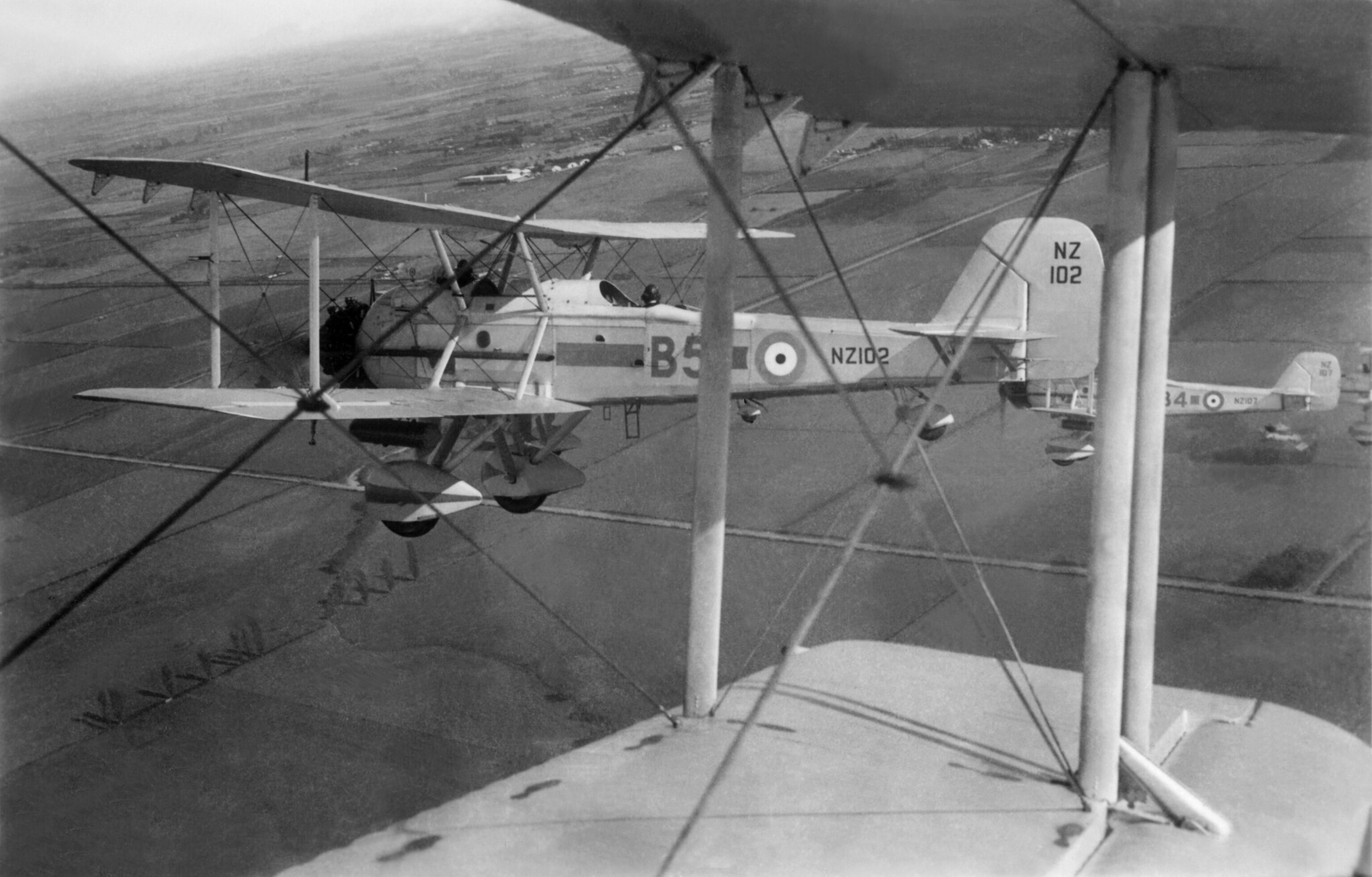
Cam learned to fly at Bell Block in the North Island, moving on to advanced training at Woodbourne in Blenheim, at the time when WW1 Ace Keith Caldwell was CO.
He recalls flying the Vildebeest:
‘The dashing thing to do with this lumbering Wildebeest was to loop it. Eventually I summoned up enough courage to attempt this manoeuvre, although the aircraft was not built for aerobatics. At the top of the loop as the cockpit was ahead of the wings was like being out in space with no means of support. There was, of course, the great prop thrashing around. The aircraft would pause at the top of the loop, tilt suddenly down and rush vertically at the ground.’
He and fellow pilots boarded the ship for the long trip to the UK, via the Panama Canal.

Once there he was instructed on Spitfires and flew both Spitfires and Hurricanes in the defence of Britain and in raids across to the Continent. His squadron was deployed to the Mediterranean in 1941 but with news of the Japanese attack on Pearl Harbor, a new destination was given: Singapore.
‘There were headlines in the Singapore papers – “Hurricanes come to save Singapore”. How disillusioned the people of Singapore were soon to be…What should have been done… was to keep all the Hurricanes on the ground until they were up to top fighting condition – all 30-32 of them... The Japanese held the British Air Force in such contempt that they made no attempt to hide their intensions. Early in the morning a lone reconnaissance plane would circle the intended target, followed sometime later, always at the same time, by a wave of bombers, 27 I think, in perfect formation… so it would have been easy to lie in wait with a formidable force of Hurricanes… in the event it was probably a political decision. Eight Hurricanes would arrive in Singapore. The long-range tanks would be removed. Eight would take off, four would be shot down. This is the way it went until all the planes were destroyed. What a waste.’
Cam was shot down defending Palembang airfield in Sumatra. Luckily, he landed in a swamp and was picked up by local natives. He was able to return to Palembang but shortly afterwards was evacuated to Batavia and then Colombo in Ceylon (Sri Lanka). While there, news came that the Japanese fleet was just south of Ceylon and an attack could be expected within 24 hours. The squadron was told:
‘ “You will be more or less in a supporting role to an almost impregnable network of Fulmars (the slow, heavy with poor manoeuvrability front line Navy fighter plane) which the Japanese would have to fly through. You will pick off the few that manage to get through”… We were on standby all night and it was about 8.00am when someone said: “Whose planes are up there” “Japs, scramble”. There they were overhead, as usual, in perfect formation about to attack. “Where were the Fulmars?” I never did find out.’
Cam was posted back to New Zealand to rejoin the RNZAF. He spent time on Norfolk Island, which became a staging point for aircraft on their way north.
‘The first thing that had to be done was cut down the beautiful avenue of Norfolk pines to make room for a runway. A tragedy’

Towards the end of 1943 he was posted back to a P-40 squadron and flew to Bougainville in early 1944.
‘Our main role was low level bombing with 1,000lb bombs … we would leave Torakina strip, Bouganville and fly North about 150 miles to a small atoll not too far from the equator, Green Island. …. from Green Island we would attack targets in New Ireland and New Britain, usually the Rabaul area ... These islands were held by the Japanese… Ground fire could be quite formidable.
Eventually after about three months the tour was over … we were to return home in two groups led by Ventura bombers… Imagine my surprise when one of the bomber crew came over to speak to me. The new navigator as it happened … my brother, Ath. I said “Hiya Snow, what are you doing here?” He replied “I’ve come to take you home”.’
Keep Up-to-Date with Omaka Aviation Heritage Centre on Our Instagram
Discover Aviation History Like Never Before
Experience the wonder of WW1 and WW2 aircraft and the stories behind them at Omaka Aviation Heritage Centre. Open 7 days, 9am–4pm, at 14 Rosina Corlett Lane, Omaka, Blenheim. Every visit supports the growth of this world-class destination.
.avif)